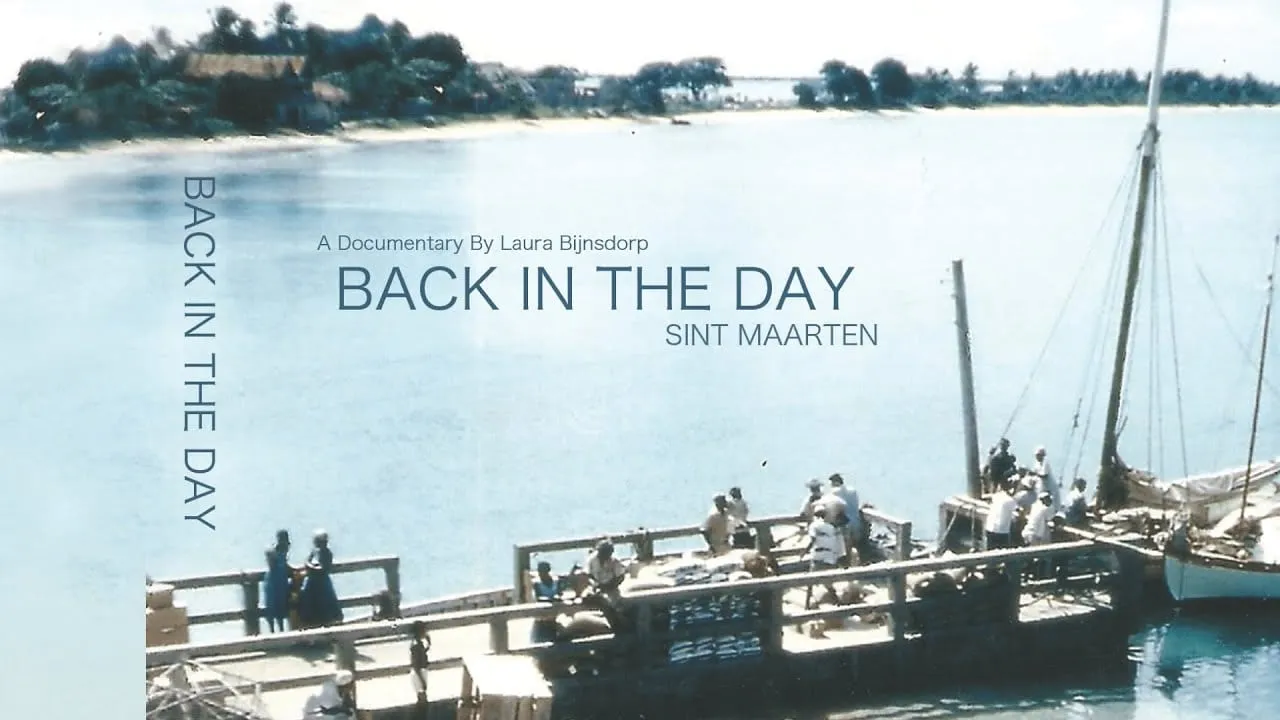
St. Martin's culture and traditions, told by six islanders who lived them before tourism: salt ponds, courtship, and food. Watch and read.
What this page covers
| Era covered | Roughly the 1920s to the 1960s, the decades before tourism reshaped the island |
| What’s included | Work and wages, food and fishing, the salt industry, courtship customs, and what changed |
| How we know this | Six St. Martiners’ own testimony, captured on film in 2012 |
| Whole island | The testimony and this page cover both the Dutch and French sides |
What life on the island was really like
St. Martin’s culture and traditions did not start with hotels, cruise ships, or duty-free shopping. For decades before any of that, life here ran on salt, fishing, small farms, and close family ties, with a whole set of customs around courtship, work, and community that most visitors today never hear about. This page tells that story mostly in the words of the people who lived it: six St. Martiners, recorded on camera in 2012, remembering the island as it was roughly between the 1920s and the 1960s.
How we know this: a documentary by Laura Bijnsdorp
Everything on this page comes from the 22-minute documentary embedded at the top of this page, Back In The Day, made in 2012 and uploaded to YouTube in 2025. It was directed, produced, and edited by Laura Bijnsdorp, who describes herself as a first-generation St. Maartener, with Rob van Dam behind the camera. Lighting was by Wouter Verheul, sound by Roeland Oud, and special effects by Lennart van Kralingen.
Six St. Martiners tell their own stories in the film: Jocelyn Arndell, Karl Arndell, Carlson Velasquez, Marjorie Richardson, Evelyn Roberts, and Cynric Griffith. Velasquez also contributed to the film’s music, alongside John Hyman and Tanny & The Boys. A group of reenactment performers, Clara Reyes, Earl Duzong, Tashana Samuels, Jason Cox, Rudolph Davis, Lucita Glasgow, Marian Jno Finn, Cavin Bridgewater, Ray-Angel Boasman, Stacy-ann Taylor, Jeremiah David, Trinity Christina, and Aldi Farrel, staged scenes to illustrate the stories; they are performers, not the people whose memories you’re hearing. The film also credits institutional support from the St. Maarten Hospitality & Trade Association (SHTA), the Ministry of Education, Culture, Youth & Sport, Het Cultuurfonds Caribisch Gebied, the Sint Maarten National Heritage Foundation & Museum, Het Raam, and LICCOM.
Bijnsdorp made the film, in her own words, about “memories of daily life, work, relationships, and entertainment” from roughly the 1920s to the 1960s, and she has said that many of the people who shared their stories with her have since passed on. She closes her own description of the film with a simple request: “Please share with appropriate credits.” That’s exactly what this page does, with her direct permission to embed and share the film.
A note on how to read what follows: this is oral history, personal memory shared by named St. Martiners, not an academic archive or a verified historical record. This is SXM presents it as testimony, attributed to the speakers and the film, and adds independently sourced context where it exists. Where the film itself only shows a speaker’s face without naming them on-screen, this page does not guess at their identity. The film names three speakers on-screen: Jocelyn Arndell (born 1941), Karl Arndell (born 1945), and Evelyn Roberts (born 1940). Others are described generically, as “another storyteller featured in the film,” because publishing an unconfirmed name would misrepresent what the film itself shows.

Work and wages before tourism
Before government jobs and hotel paychecks, a family’s income came from wherever it could. Jocelyn Arndell, born in 1941, remembers his own household this way: his mother was the breadwinner, working as a tailor, while his father, a mason by trade, often had little work to do. Later, his father found steady government work, earning around 17 Dutch guilders a fortnight, which Arndell recalls as good money for the time.
Prices from that era, as the speakers remember them: pet milk and a “double chip” biscuit for 10 cents, a housemaid’s monthly wage at around 10 guilders, a string of about six fish for one guilder, and a pair of shoes for around 10 guilders. These are personal recollections, not figures from a period wage table or price index, and they’re presented here as testimony, not as verified economic data.
Child labor was simply part of how a household worked, not an exception to it. Children helped trap pond birds, fished, and worked the salt pans for pay (more on that below). One especially vivid memory: a schoolmate too poor to afford shoes, whose mother made him a pair of sandals from a car tire in French Quarter. He hid them outside the school gate every morning so the other children wouldn’t hear them squeak and tease him for it.
Not every path led to island work. One speaker recalls his father insisting he learn a trade, testing into a technical school, and being sent to Aruba to study, part of a much larger pattern of St. Martin residents moving to Aruba and Curaçao for schooling and Shell or Lago oil-industry work during this period, a pattern that is independently documented in the broader regional record, not just in this speaker’s memory.
The Great Salt Pond, through living memory

Salt was the island’s oldest industry, and for the people who worked it, it was also childhood. One speaker remembers throwing salt onto the heap alongside a cousin as a boy, paid by the barrel: “if you throw out 12 pans, they say that’s a barrel,” with pay handed out weekly. He describes the Great Salt Pond in Philipsburg (before the town added its two other streets) as probably the biggest salt pond among the islands, in his own words, a claim of personal impression, not an independently verified regional ranking.
The Great Salt Pond wasn’t the only one. Another speaker names several more that the family worked or knew: ponds near Mary’s Fancy, at Guana Bay, at Point Blanche, near what’s remembered as Atwell Pond, Fresh Pond, Red Pond, Gibbs Pond, and ponds in French Quarter and near Mullet Bay. These names and spellings come directly from the speakers and have not been checked against a modern gazetteer, so treat them as remembered place names, not confirmed current map labels.
Sunday afternoons sometimes meant a walk out just to watch the salt pickers at work, and to notice how the ponds’ waters could show different colors, “like the rainbow,” as one speaker put it. That world is largely gone. The same speakers describe the ponds being filled in for homes and businesses over the decades, one saying plainly, “they’re still filling, they won’t stop.” That is the speakers’ own observation of change over their lifetimes, not a land-registry or environmental record, and this page presents it as exactly that.
This labor connects directly to the island’s broader salt-era history. For the fuller economic and imperial story of salt on St. Martin, see the Salt and Empires era on the full history timeline, and for the monuments honoring the people who did this work, see the Salt Pickers and Emancipation monuments in the culture collection.
A world before refrigerators

Without refrigeration or much imported meat, food came from the yard, the sea, or the hills, as one speaker summarized it. Fishing filled a lot of that gap: line fishing as a child, and a named local fisherman, “old Joe” of Simpson Bay, who net-fished with help from the whole community. Lobster was caught by hand at night, using a torch, “a corn bag full” in about half an hour, according to one speaker’s memory.
The food itself was a specific, remembered list: fish with cornmeal fungi, sweet potato, cassava, dumplings and soup, pig-foot and sheep-head soup, whelks, and seasoned, roasted pond birds trapped by children at the edge of the salt-pond ridge, using sticks, cord, and horsehair. One speaker recalls the birds needing no added seasoning at all, since “they got it from being around the pond.”
That same speaker draws a hard line between then and now: “Now you can’t afford that anymore. There’s nothing left. Everything gone. Everything gone.” This is a personal, lived observation of change in fish and reef abundance over decades, not a scientific fish-stock survey, and it’s presented here as testimony, the way the film itself presents it.
Courtship rules you don’t see anymore
This is the one section on this page with no supporting photograph, and that’s deliberate. No genuine courtship- or wedding-specific photograph of St. Martin from this era was found in any collection searched for this feature, and using an unrelated photo captioned to suggest courtship would misrepresent what it actually shows. The testimony itself, in the embedded film above (roughly 16:00 to 17:00), is the evidence for this section.
One speaker, a woman, describes the formal rules a suitor had to follow: he had to write a letter to the woman’s parents asking permission before courting her, he could never be left alone with her during a visit, and he had to show he already had land or a house of his own before marriage would be allowed. She presents this as a protective norm for the era, not a restriction, and this page follows her framing rather than reading it through a modern lens she did not use herself.
Weekend life had its own customs too. Dances were held at a venue remembered as “the Swing Hike,” playing a mix that spanned Beatles-style pop, calypso, what the speaker calls “Minga” (very likely merengue), rock and roll, and slow songs for dancing close. A young man might offer his dance partner a drink as a small courtship gesture of its own. One speaker recalls staying out until two or three in the morning and working through exhaustion the next day, “we run woman,” as he put it in his own island vernacular.
What’s changed, in their own words
Two speakers, independently, land on the same thesis: the island the interviewees grew up in is largely gone, not because anyone destroyed it on purpose, but because development filled it in, pond by pond, and because most people today, in their view, don’t recognize or protect what the island still has. Bijnsdorp’s own framing for the film echoes this: she has said she made it because it deepened her own appreciation for the island’s natural and cultural heritage, and that heritage should guide development, not be treated as an obstacle to it.
This page treats both of these as exactly what they are: personal testimony and the film’s own editorial argument, not an independently verified environmental or historical record. They’re worth hearing on their own terms, which is why the film is embedded above rather than only summarized.
Watch and listen for yourself: a chapter guide
The timestamps below are approximate, drawn from the film’s own captioning, and are for finding your way back into the embedded film above. They are not clickable deep links.
| Around | What’s covered |
|---|---|
| 0:00-1:10 | Opening: an animated map of the Antilles and a reenacted family scene |
| 1:10-3:20 | Family income, gender roles, and the cost of living, told by Jocelyn Arndell |
| 3:45-5:00 | Getting around without cars: a donkey named Belvida, and how quiet the island was |
| 5:00-6:50 | School, poverty, and the story of the car-tire sandals |
| 6:50-8:15 | Leaving for trade school in Aruba, told by Karl Arndell |
| 8:15-10:10 | Children’s games and building pond-bird traps |
| 10:10-13:20 | Fishing, food without refrigeration, and a speaker’s “everything gone” reflection |
| 14:10-16:00 | Weekend dances at “the Swing Hike” and courtship customs around them |
| 16:00-17:00 | Formal courtship rules: the letter to the parents |
| 17:00-19:30 | The Great Salt Pond, salt-pay by the barrel, and the island’s other named ponds |
| 19:30-20:35 | A closing reflection on the island’s sweetness, and what people take for granted |
| 20:35-22:52 | A closing song and the film’s full cast and crew credits |
Frequently asked questions
What is St. Martin's culture and traditions like?
A blend of Dutch, French, African, and wider-Caribbean influence, shown in food, music, and Carnival, but also, less often told, in the daily-life customs and pre-tourism work culture that shaped the island for generations.
What was life like on St. Martin before tourism?
A mostly rural, non-refrigerated economy built on fishing, salt harvesting, small farming, and close family ties, with formal courtship customs and few imported goods, according to St. Martiners who lived through it.
When did tourism change St. Martin?
Testimony and the site's own history timeline place the shift from roughly the 1950s through the 1970s, as the airport, hotels, and the wider Caribbean tourism boom reshaped the island's economy.
What was the salt industry like on old St. Martin?
Speakers describe piece-rate pay by the salt barrel, child participation in the work, and multiple ponds beyond the Great Salt Pond, most of them now filled in for development.
Is there video or firsthand testimony of what old St. Martin was like?
Yes. This page features the full 2012 documentary Back In The Day by Laura Bijnsdorp: six St. Martiners recalling daily life, work, food, and courtship from roughly the 1920s to the 1960s, embedded here with her permission and full credit.
Who directed the documentary featured on this page?
Laura Bijnsdorp, a first-generation St. Maartener by her own description, directed, produced, and edited Back In The Day, with Rob van Dam as director of photography.
Is this testimony a verified historical record?
It is oral history: personal memory from named St. Martiners, not an academic or archival source. This is SXM presents it as testimony, attributed to the speakers and the film, alongside independently sourced context where available.
Where can I see old photos of St. Martin?
This page's photographs come from the Dutch national and colonial archives, credited below each image. The documentary itself is not a photo source. This is SXM's history pages hold further archive images by era.
Want the fuller story?
This page covers one deep, personal slice of St. Martin’s history. For the island’s full 5,000-year timeline, from its first peoples through Irma and today, visit the complete history of St. Martin. If you liked hearing the island’s own voices here, you’ll likely enjoy the story of O Sweet Saint Martin Land, the island’s shared, cross-border anthem. And if the donkey-to-modern-transport story caught your attention, the transportation guide picks up that thread today.
Get the island’s stories in your inbox. One deep dive like this every month, no noise.
Sources and verification
This page draws entirely on Back In The Day (2012), a documentary directed, produced, and edited by Laura Bijnsdorp, embedded above and shared with her permission, with full credit to her and her cast and crew. Testimony from the film’s six named storytellers, Jocelyn Arndell, Karl Arndell, Carlson Velasquez, Marjorie Richardson, Evelyn Roberts, and Cynric Griffith, is presented as personal memory, attributed to the speakers and the film, not as independently verified historical fact. Where This is SXM’s own history timeline independently corroborates a claim (the salt industry’s economic importance, the general pattern of Aruba and Curaçao labor migration, the rough 1950s-1970s tourism-era transition), that corroboration is noted in the text above. Reviewed: September 2026.