The tourism board itself tells you not to swim here
Destination marketing organisations do not usually publish warnings against using the product. Sint Maarten's does, for this beach.
The official Visit St. Maarten page states that swimming is discouraged because the currents and undertows can be very strong, and recommends the beach for surfing, windsurfing, kitesurfing and for nature lovers rather than for swimmers. Its Beach of the Week feature repeats that authorities discourage swimming here.
Independent descriptions line up exactly: waves break hard on the sand, the bottom drops sharply, frequent rip currents, dangerous except in calm seas, no lifeguard. A local naturalist writer names the actual trap: the water is inviting to swimmers, but deceptively dangerous.
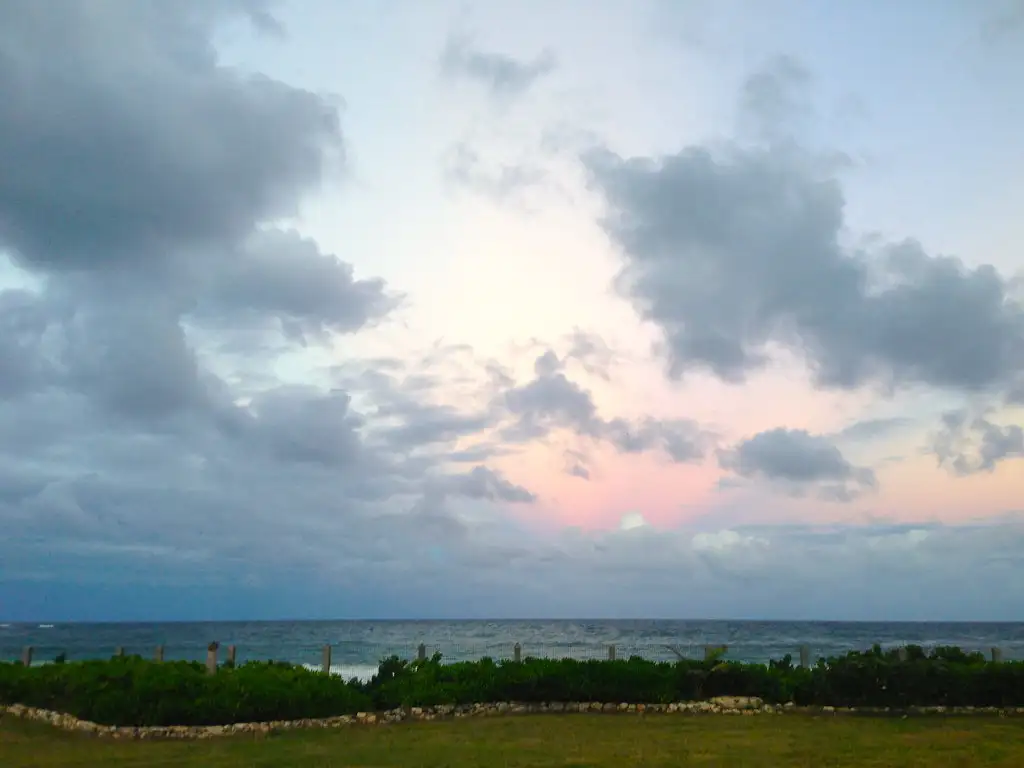
That is the point. On a bright day this bay looks like every other Caribbean beach photograph. The danger is not visible from the sand.
One thing sources disagree on: the official bureau says the sand slopes gently into the sea with no need for protective footwear, while an independent guide says the bottom drops sharply. Both cannot be generally true, and it is very likely seasonal, since swell moves sand on an exposed Atlantic beach. Treat the nearshore profile as unsettled and the warning as settled.
What is actually documented about deaths here, and what is not
Guana Bay has a reputation for deaths, there is real documented loss of life here, and the best-documented case is not a tourist rip-current drowning. A responsible page should not imply that it is.
On Saturday 6 May 2023 two bodies were found at Guana Bay Beach: a woman in the water at about 6:30am with personal belongings nearby, and a man on the sand at about 10:15 to 10:30am. Both were recovered, with the Coast Guard assisting with the first. Police reported that the victims had bags with clothing and other items when they were found, that witnesses indicated the people appeared to have been dropped near Guana Bay and were possibly drowning while trying to swim ashore, and that authorities believed they had been on a vessel that was trafficking humans. The Major Crimes team appealed publicly for witnesses. No cause of death was released and no identities were published.
Separately, a man was shot dead in the Guana Bay residential area, not on the beach, at around 9:15pm on 11 to 12 June 2024.
What we could not establish is a documented case of a tourist or recreational swimmer drowning here. That does not mean it has not happened. It means it is not in the accessible record, and we are not going to imply otherwise.
The honest case is strong enough without overstating it: the official warning is unambiguous, the conditions that cause drownings are documented and present, rescue is slower here than anywhere comparable, and this beach has already been the site of at least two water-related deaths.
Sint Maarten's most important turtle beach
This is Guana Bay's real claim to significance and almost nobody writes about it.
The Nature Foundation identifies Guana Bay as Sint Maarten's most critical turtle nesting beach and as the index beach for all three sea turtle species that nest on the island, meaning it is the reference site against which island-wide nesting is monitored.
Everything that makes it bad for swimming makes it good for turtles: no resort, no lighting, no night-time crowds, no mechanical raking. And that is also why the threats here are specific. Sargassum piling up on the nesting strip smothers nests and blocks hatchlings, a concern the Foundation raised directly during the 2014 influx, which hit at peak nesting. It has separately warned about heavy reconstruction equipment on nesting beaches. Island-wide, it reports nesting declining while turtle deaths rise.
The practical rules for a visitor: stay off the dry upper sand, do not drive on the beach, take your litter with you, and use no lights on the beach at night during nesting season.
Sargassum, and the fact that nobody rakes this beach
Guana Bay is among the worst-affected beaches on the island and it is named first in advisory after advisory.
In the August 2014 influx the Nature Foundation warned against swimming at Guana Bay specifically, noting it had the heaviest concentration of the affected beaches, and flagged that floating mats can hold garbage and nets. The Foundation has advised Guana Bay and Point Blanche residents to keep windows and doors closed as much as possible because of hydrogen sulfide from decomposing seaweed. VROMI listed Guana Bay among the areas with concerning levels of accumulation in the May 2025 sargassum emergency. Visitors confirm it on the ground, with odour and flies.
The season runs roughly March to September, worst around May to August, and 2026 was forecast heavy.
Here is the part that separates this beach from Dawn Beach: nobody rakes it. There is no resort here with an interest in clearing the sand, so it accumulates. The government's 2025 statement names Guana Bay as affected but does not confirm that any cleanup actually happened here.
One historical illustration of the same structural point. In June 2010 the Vice President of the St. Maarten Pride Foundation found that construction materials had been burned on this beach, leaving hundreds of rusty nails in the sand, and raised both the tetanus risk and the fact that this is a turtle nesting beach. Who burned them and what followed was never reported. That is sixteen years old and belongs in the history column, but it makes the point: this is the island's most ecologically important beach and the one with the least supervision. The three tons of debris that 100 cruise passengers removed from it in a three-hour volunteer cleanup in January 2018 makes the same point from the other direction.
What it is actually good for, and one claim to ignore
Reframe what you are coming for and Guana Bay is worth the drive. It is about 500 metres of empty Atlantic beach, with views across to St. Barths, roughly 10 to 15 minutes from Philipsburg over the hill. Sources agree on that length, which is unusual on this island.
It is one of the few surf and bodyboard spots on Sint Maarten, with consistent waves during northeast swells, strongest roughly November through March. There is no surf school, no board rental and no lifeguard, so this is for people who already know what they are doing and preferably not alone. Nobody has published which swell direction and size actually work, or whether the break has a name.
It is also the trailhead for the natural pool hike, and it is very nearly always empty. A 2009-era forum thread explained why and the explanation still holds: it is remote and secluded with no major resorts or commercial establishments, so few people stay there. There is nothing to buy on the sand, so bring water, sun protection and shade.
One claim to ignore. A villa-marketing page describes this beach as having turquoise waters sheltered by coral reefs, says the reefs provide shelter from strong currents making it family-friendly, and lists swimming and snorkeling among its activities. That is the direct opposite of the official warning and of every independent description of the shorebreak and drop-off, and the same page places the beach next to a property on the other side of the island. If someone books on that description and takes children into the water here, the consequences are not hypothetical.