You booked the island. Now the real question: which side do you sleep on? It matters more than a lot of guides let on, and less than the “Dutch vs French” framing makes it sound. Here is the honest version.
Short answer: stay Dutch for convenience, nightlife, and value. Stay French for food, calm, and the better beaches. It is one small island with an open border, so whichever you pick, the other side is a short drive away.
One island, two countries, no border stop
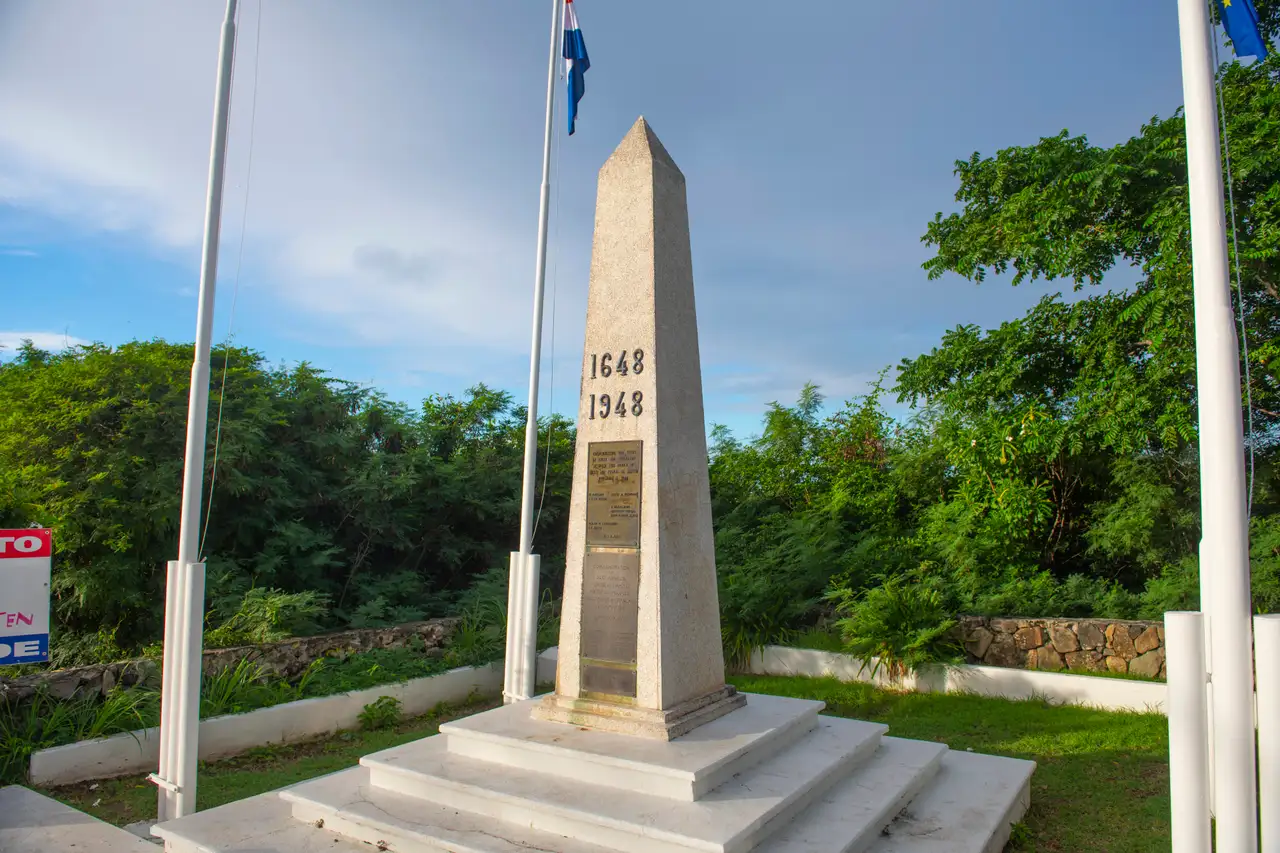
St. Maarten and St. Martin are the same island: about 87 square kilometers (34 square miles) of it, split between the Kingdom of the Netherlands in the south and France in the north. The line was drawn in 1648 by the Treaty of Concordia, which is often called one of the oldest still-standing borders in the world, and there is a much-loved legend about a walking contest that supposedly set it. You can read that whole story, and how the two sides drifted apart and grew back together, on our history page.
What matters for your trip is simpler: there is no checkpoint. You cross from one country to the other on an open road, marked by little more than a welcome sign and a switch in the language on the signage. That single fact is why “which side” is a softer choice than it looks. You are never more than a short drive from the thing the other side does better.
The two sides at a glance
| Dutch side (Sint Maarten) | French side (Saint-Martin) | |
|---|---|---|
| Atmosphere | Busy, built-up, American-leaning | Quieter, European, cafe-paced |
| Food | Wide range, mostly casual | The island’s fine dining and lolos |
| Nightlife | Casinos, bars, late clubs | Long dinners, little after dark |
| Beaches | Developed, easy to reach | Longer, wilder, some clothing-optional |
| Prices | More budget and mid-range options | Runs pricier, euro dining |
| Currency | US dollars in practice | Euros (dollars often accepted) |
| Language | English everywhere | French first, English in tourist spots |
| Electricity | 110V, US-style flat-pin plugs | 220V, European round-pin plugs |
| Airport | Princess Juliana (SXM), the main gateway | Only a small regional airfield |
| Safety | Fine with normal caution | Fine with normal caution |
Now the detail behind each row, with the tradeoffs both sides would rather you not read.
Atmosphere
The Dutch side is the loud, convenient, commercial half: cruise ships, casinos, big resorts, duty-free shopping, and real traffic. It leans American in how it feels and how it charges. The French side is the slower, more European half: cafe terraces, markets, long lunches, and less to do once the sun goes down. Neither is “better.” One is a place to do things; the other is a place to unwind. Be honest with yourself about which trip you actually want.
Food and nightlife
For food, the French side wins, and it is not close. Grand Case is the island’s dining street, running from open-air lolos grilling ribs and snapper to serious French kitchens, and Marigot adds French bakeries and a proper waterfront market. The tradeoff is price and quiet: French-side dinners cost more, and the villages go to sleep after the plates are cleared.
For nightlife, it is the reverse. The Dutch side is where the island stays up: the casinos and bars of Simpson Bay and Maho, and the boardwalk in Philipsburg. If a late night out is part of the plan, sleep on the Dutch side or budget a taxi home across the island.
Beaches
The French side has the longer, wilder beaches: Orient Bay, Baie Rouge, Happy Bay, Friar’s Bay. Several have a clothing-optional stretch, which is worth knowing if you are traveling with kids. The real catch is seaweed: the east coast, Orient Bay included, collects sargassum from roughly spring through summer, and it varies year to year.
The Dutch side beaches are more developed and easier to reach. Mullet Bay is the local favorite, and Maho is the one where the planes land low over your head. Neither side has a bad beach. They are just different kinds of good: wild and scenic on the French side, easy and lively on the Dutch.
Prices and currency
As a rule, the French side runs more expensive, driven by euro-priced dining and imported French goods. The Dutch side has more budget and mid-range lodging, cheaper groceries in the big supermarkets, and the duty-free shopping the cruise crowd comes for. Fair warning either way: this is an expensive island by Caribbean standards, whichever side you land on.
On money itself: the Dutch side quotes and takes US dollars almost everywhere, even though its official currency is the Caribbean guilder. The French side runs on the euro. Plenty of French-side businesses will accept dollars, but often at a rate that quietly favors them, so paying in euros or by card usually costs you a little less.
Language
English is the working language on the Dutch side and is spoken everywhere. On the French side, French comes first. In the tourist parts of Grand Case, Orient Bay, and Marigot you will get by in English, but a few words of French go a long way, and away from the visitor strip they are genuinely useful.
Electricity, the detail that catches people out
This one trips up travelers every week. The Dutch side runs on 110 volts with the same flat-pin plugs as the United States. The French side runs on 220 volts with European round-pin plugs.
So if you are coming from North America and staying on the French side, you need a plug adapter for everything, and anything that is not dual-voltage, some hair dryers and older electronics especially, needs a voltage converter too, or it will burn out. Coming from Europe and staying on the Dutch side, it is the mirror image. Check your chargers: most phone and laptop bricks are dual-voltage and only need the adapter, but do not assume it.
Airport access
The island’s main airport, Princess Juliana International (SXM), is on the Dutch side. Wherever you stay, this is where you fly in. If you are staying on the French side, factor in a drive of roughly 20 to 40 minutes from the airport depending on where you are headed, longer for the far north like Anse Marcel. The French side’s own airfield handles only small regional flights, so it will not be your arrival point from overseas.
Safety
Both sides are, for the most part, safe for visitors using normal city sense. The most common problem for tourists is petty theft, above all break-ins at cars left at quiet beaches. Do not leave anything visible in a rental, on either side, and we flag the beaches with a break-in reputation on their individual pages. Violent crime exists on the island, mostly away from the tourist areas and not usually involving visitors, but it is not zero. This is not a place to switch your guard fully off, and it is not a place to be nervous either.
Which side is right for your trip?
Here is the shortcut, by the kind of traveler you are.
- Here for the nightlife. Dutch side, clearly. Base in Simpson Bay or Maho so the bars and casinos are a walk, not a cross-island taxi.
- A couple after a quiet, romantic trip. French side. Eat your way through Grand Case and sleep somewhere calm like Anse Marcel or Cupecoy on the Dutch side’s quiet western edge.
- Traveling with kids. It is a toss-up. The Dutch side is more convenient, with everything close together in Simpson Bay. The French side has the better natural beaches, but mind the clothing-optional stretches and the seaweed season; the calmer north end of Orient Bay is the usual family pick.
- Foodies. French side, full stop. Grand Case first, then Marigot.
- Cruise passengers with one day. You dock in Philipsburg on the Dutch side, so start there and decide whether a taxi to a French-side beach is worth your hours.
- On a budget. Dutch side. More mid-range lodging and food, cheaper groceries, and dollars already in your pocket.
The honest bottom line
You do not have to choose as hard as the question makes it sound. It is one small island with an open border, and you can sleep on one side and eat, beach, and explore on the other the same day. Stay Dutch for convenience, nightlife, and value. Stay French for food, calm, and the better beaches. Then cross over as often as you like, because half the fun here is that you can.