The reserve rules that actually apply here
Most writing about this bay says vaguely that it is in the nature reserve. The specific rules are published and worth stating precisely, because they are enforceable rules rather than guidance. Under Prefectural Order 2020-142, which the Réserve Naturelle Nationale de Saint-Martin publishes in French and English:
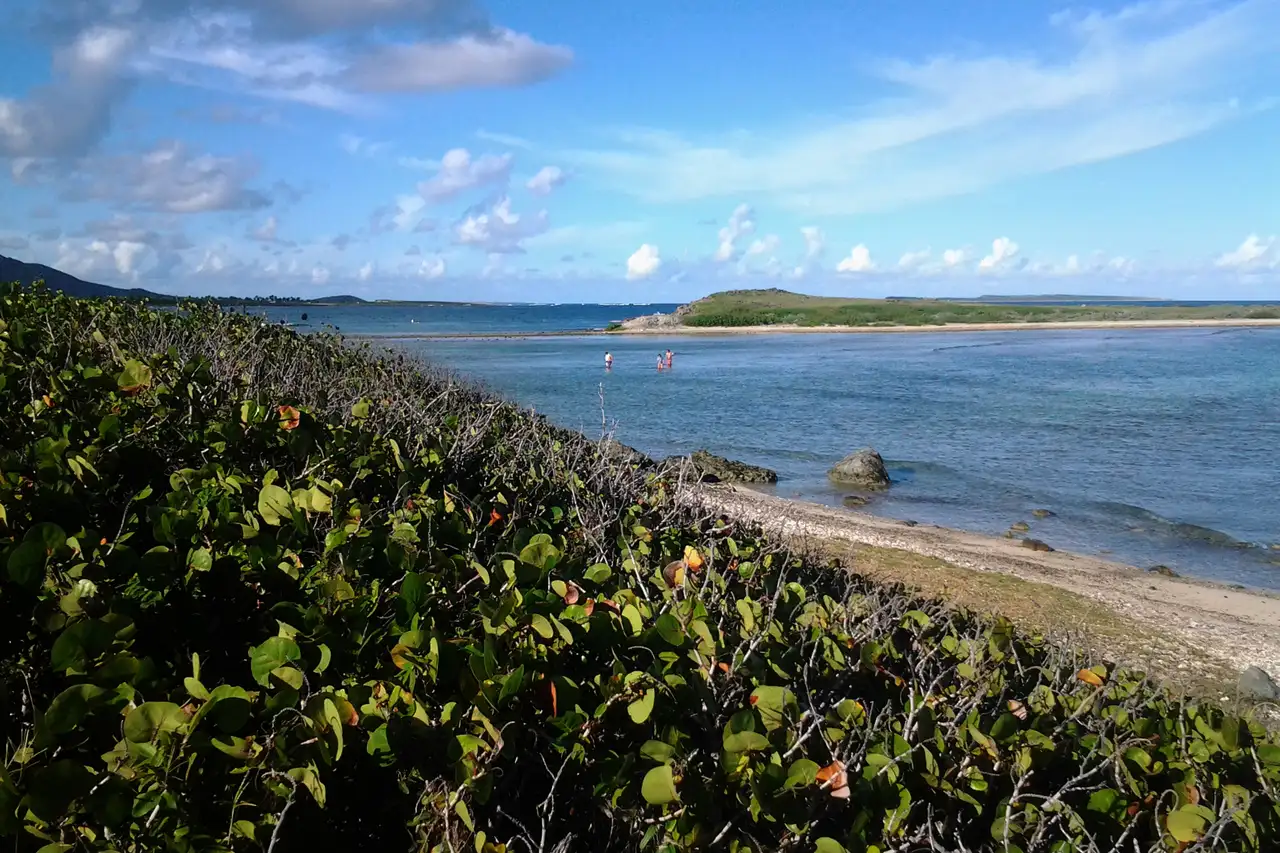
All kinds of fishing are prohibited in the waters between Galion Bay and the Étang aux Poissons. Kitesurfing is prohibited at Galion Bay. Motorised nautical activities are prohibited, including individual motorised submersible craft and anything towed behind a boat. Unauthorised mooring is prohibited throughout the reserve and night mooring requires express permission. Anchoring in reef or seagrass zones is forbidden, and private boats under 10 metres may anchor only on sand, outside a 20 metre beach safety zone.
Bivouacs and campfires are prohibited outside designated zones, and camping requires an authorisation for which the reserve publishes a form. Motorised vehicles, including cars, motorcycles and quads, are prohibited except on established roads. Collecting shells, dead or alive, and vegetation, dead or alive, is prohibited. Cliff climbing is prohibited here for safety reasons.
No English-language travel site appears to carry that list, which is odd, because it is more useful to a visitor than any description of the sand.
The kitesurf contradiction
This bay and Le Galion are marketed across the kite industry as St. Martin's flat-water spot, and French operators sell dedicated kitesurf and wingfoil trips built on this water.
Meanwhile the prefectural order prohibits kitesurfing at Galion Bay, and local news reported the same prohibition in January 2016 under a decree dating to 29 March 2010. Two separate instruments a decade apart, the same prohibition, and an industry that markets the spot regardless.
There are plausible reconciliations. The prohibition may attach to a specific sub-zone rather than the whole shoreline, schools may operate in Orient Bay proper and use Galion loosely as a spot name, or the rule may simply be unenforced. The sources do not resolve it.
One small piece of evidence pointing at the second explanation: a currently operating kite school, with reviews running through February 2026, describes itself as based at Cul-de-Sac in front of Pinel with lessons on Orient Bay depending on wind direction. It notably does not name Galion.
What is defensible to publish: the regulation exists, it says what it says, and you should confirm the current position with the reserve or with your school before booking. The reserve publishes a bornage map for the Galion sector that would settle it.
Turtles: what the reserve says, and what it does not
Sea turtles nest on Saint-Martin beaches from 1 March to 30 November, peaking in August and September, across three species: green, hawksbill and leatherback, with green the most frequently recorded.
The reserve's own published nesting figures name Plum Bay, Long Bay, Tintamarre, Anse Marcel, Baie Rouge and Orient Bay as the productive sites, with the Lowlands beaches and Tintamarre accounting for roughly 99% of observed nesting. Baie de l'Embouchure is not named in the reserve's nesting data in the material we retrieved.
Several travel sites assert this is an important nesting site for hawksbill and green turtles. The most emphatic of them is demonstrably unreliable elsewhere, including on this same bay, where it asserts camping is permitted in contradiction of the prefectural order.
The defensible statement is narrower and still worth making: the seagrass beds here are turtle feeding habitat, turtles are present, and whether the beach itself is a significant nesting site is unconfirmed. Getting that right matters, because turtle claims drive both traffic and behaviour.
The mangrove and the pond, which is the real subject
Behind the beach sits the Étang aux Poissons, one of the largest ponds in the area, ringed with mangrove that shelters fish, shellfish and birds.
The whole system is part of the Ramsar wetland site Zones humides et marines de Saint-Martin, designated on 27 October 2011, covering 2,996.7 hectares, explicitly including the Salines d'Orient and the Étang aux Poissons within a network of 14 ponds, and supporting up to 85 bird species and over 100 fish species.
That is an internationally recognised wetland sitting behind a beach that most visitor guides sum up in a sentence about windsurfing.
There is a panoramic watchtower on the headland, the Coralita Observatory, with interpretive panels about local species and views over the mangrove, the Étang aux Poissons, Galion Beach, Pic Paradis, Anguilla and St Barths. It exists precisely to make this legible, and it is a short climb. Treat the pond as the attraction and the beach as the approach.
The windsurf lineage, and a business to check before you rely on it
Windsurfing on St. Martin has its historical home here. Tropical Wave, also called Chez Pat, run by Pat Turner, who has been on the island since 1977, operated the watersports and food concession at this bay and is described as traditionally the home of windsurfing on St. Martin, renting equipment, beach chairs and umbrellas and serving sandwiches, burgers, salads and drinks.
That is a genuine island story: one operator, five decades, a bay chosen for its flat water. It is also a trap. The source is undated and reads as pre-2017, and we could not confirm from anything that the business is open in 2025 or 2026.
So treat it as history unless you can verify it as current, and do not turn up here expecting to rent a board. Bring your own food and water: this bay is largely undeveloped and there is nothing built here.
One more thing to be honest about. This is an east-facing Atlantic coast with a shallow bay that traps what arrives, which means high sargassum exposure across the roughly March to October season, and no organised clearing. The same flat shallow water that makes it good for a beginner on a board makes it a trap for weed.